Contact Us: (901) 675-6125



Have you ever looked in the mirror and wondered when your skin decided it needed a completely different skincare routine? Maybe your favorite moisturizer doesn’t seem to work as well anymore. Your face feels tighter after washing, your skin looks a little duller, or those fine lines seem more noticeable than they used to. Well, ladies, if you’re over 40, you’re not necessarily imagining things.
As we move through perimenopause and menopause, hormonal changes can affect our skin just as they affect our sleep, body composition, and metabolism. And while we spend plenty of time discussing weight gain and hot flashes, skin health deserves some attention, too.
The good news? You don’t need a cabinet full of expensive products to care for your skin as you age. Understanding what’s changing and choosing the right ingredients can make a meaningful difference.
Affiliate Disclosure: This article contains affiliate links. If you purchase through one of these links, Ample Health & Wellness may earn a commission at no additional cost to you. I share products and resources that I believe may be useful to my community.
Why Does Skin Become Drier After 40?
One of the major changes during menopause is declining estrogen. Estrogen contributes to skin hydration, collagen maintenance, and elasticity. As estrogen levels decrease, skin may become thinner, less elastic, and less able to retain moisture.
According to the American Academy of Dermatology, menopause can bring increased dryness, sensitivity, and changes in skin texture. And here’s something worth remembering: not every new wrinkle or dry patch is caused by menopause. Sun exposure, genetics, environmental conditions, medications, and everyday skincare habits also influence how our skin changes. So instead of declaring war on aging, let’s focus on supporting healthier skin.
Four Skincare Habits That Actually Matter
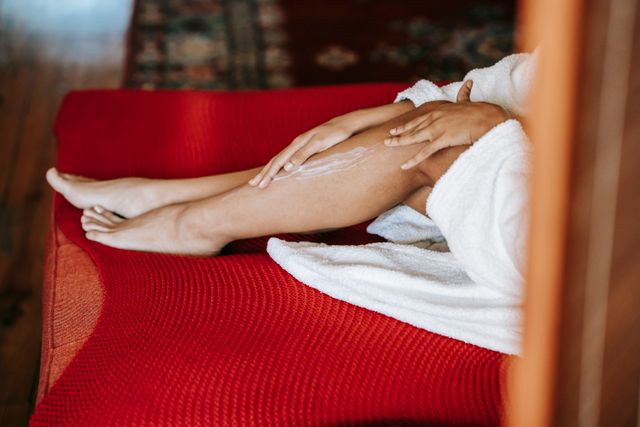
1. Moisturize Consistently
Moisturizing isn’t just about making your face feel soft for a few minutes. A good moisturizer helps reduce water loss and supports the skin’s protective barrier. Look for ingredients such as:
- Glycerin: A humectant that attracts water.
- Hyaluronic acid: Helps bind water and temporarily plump the appearance of skin.
- Ceramides: Help support the skin barrier.
- Petrolatum or other occlusive ingredients: Help reduce moisture loss.
Note: Applying moisturizer while your skin is still slightly damp can be especially helpful.
2. Be Gentle With Cleansing
Sometimes we do too much to our skin. Harsh cleansers, frequent exfoliation, and overly hot water can worsen dryness and irritation. A gentle cleanser, lukewarm water, and a moisturizer suited to your skin type may be more useful than an elaborate routine.
3. Don’t Skip Sunscreen
If there’s one skincare habit worth maintaining, it’s daily sun protection. The American Academy of Dermatology recommends broad-spectrum sunscreen with SPF 30 or higher. Sun exposure contributes to premature skin aging, uneven pigmentation, and skin cancer risk. And yes, sunscreen matters for women with darker skin tones, too.
4. Pay Attention to Skin Sensitivity
Products that worked beautifully in your 30s may become irritating later. If your skin is increasingly sensitive, fragrance-free products may be a better starting point. Introduce new products one at a time, and discontinue anything that causes persistent irritation.
What About Ingredients That Promise Younger-Looking Skin?

This is where skincare gets interesting. Some ingredients have research supporting improvements in skin hydration, pigmentation, or the appearance of fine lines. But there’s an important difference between research on an individual ingredient and proof that a particular finished product works. Let’s look at a few ingredients that caught my attention.
- Bakuchiol: Bakuchiol is a plant-derived compound sometimes marketed as a gentler alternative to retinol. In a small randomized clinical trial involving 44 participants, researchers compared topical bakuchiol with retinol over 12 weeks. Both groups experienced improvements in certain measures of photoaging, while the retinol group reported more scaling and stinging (Dhaliwal et al., 2019). That’s promising, but it doesn’t mean every product containing bakuchiol will deliver the same results.
- Niacinamide: Niacinamide, a form of vitamin B3, is used in skincare products for its potential to support the skin barrier and improve the appearance of uneven skin tone.
- Hyaluronic Acid and Glycerin: These ingredients are particularly relevant when dryness is the main concern. Both help attract water, making them useful additions to many moisturizing formulations.
And remember, the best ingredient isn’t necessarily the trendiest one. It’s the one your skin tolerates and that addresses your actual needs.
One Moisturizer That Caught My Attention: DermaVeda Ultra Moisturizer
While exploring skincare products for women over 40, I came across the DermaVeda Ultra Moisturizer from Celsius Herbs. The product is marketed for hydration and the appearance of aging skin, and its packaging identifies ingredients including bakuchiol, niacinamide, hyaluronic acid, glycerin, carrot seed oil, and vetiver extract. I haven’t personally tested this moisturizer, so this isn’t a hands-on product review. I’m highlighting it because some of its listed ingredients are relevant to the skincare concerns we’re discussing.
What I Find Interesting About the Ingredients
According to Celsius Herbs, DermaVeda Ultra Moisturizer features several ingredients associated with skin hydration and skincare, including:
- Bakuchiol: A plant-derived ingredient studied for its potential to improve the appearance of fine lines and uneven pigmentation.
- Niacinamide: A form of vitamin B3 that may support the skin barrier and improve uneven skin tone.
- Hyaluronic acid: Helps attract and retain moisture.
- Glycerin: A well-established moisturizing ingredient that helps hydrate the skin.
- Botanical ingredients: The company also highlights plant-derived ingredients such as carrot seed oil and other botanical extracts.
Note: These are selected ingredients highlighted in the product information and packaging, not a complete ingredient list. Their inclusion does not establish the effectiveness of the finished product. Readers with sensitive skin or known allergies should review the full product label before purchasing.
Interested in exploring the moisturizer?
Do You Really Need an Anti-Aging Moisturizer?
Here’s where I want to change the conversation a little. We hear the phrase anti-aging everywhere. But aging isn’t a disease, and getting older isn’t something we need to apologize for. Our goal should be to care for our skin, improve comfort, address concerns that matter to us, and protect our overall health.
A moisturizer doesn’t have to erase every wrinkle to be useful. If it helps your skin feel comfortable, reduces dryness, and fits your routine and budget, that may be a worthwhile benefit. And if your skin does well with a simple fragrance-free drugstore moisturizer, you don’t need to replace it just because another product has a fancier ingredient list.
Skin Health Is Part of Whole Health
In my FRESH Framework at Ample Health & Wellness, the H stands for Honor Whole Health. That means looking beyond the number on the scale. It means considering sleep, stress, movement, nutrition, emotional well-being, and yes, skin health. Sometimes caring for ourselves means making healthier food choices or finding time to exercise. Other times it means protecting our skin from the sun, establishing a manageable skincare routine, or getting a persistent rash checked by a dermatologist.
If you’re dealing with severe dryness, cracking, ongoing itching, or new skin changes that don’t improve, don’t automatically blame menopause. A healthcare professional can help identify other possible causes.
Final Ample Thoughts
Dry skin after 40 is common, particularly as women move through menopause. But that doesn’t mean we’re powerless to do anything about it. Start with the basics: gentle cleansing, consistent moisturizing, daily sunscreen, and paying attention to what your skin needs.
Products containing ingredients such as glycerin, hyaluronic acid, niacinamide, and bakuchiol may be worth considering, depending on your concerns and skin sensitivity. The DermaVeda Ultra Moisturizer is one option to explore, but no single cream is necessary for healthy aging.
And ladies, remember this: Taking care of your skin isn’t about trying to look 25 again. It’s about caring for the woman you are today. That’s what honoring whole health looks like. 💙

📚References
American Academy of Dermatology Association. (2025, November 24). Caring for your skin in menopause. https://www.aad.org/public/everyday-care/skin-care-secrets/anti-aging/skin-care-during-menopause
American Academy of Dermatology Association. (n.d.). Dermatologists’ top tips for relieving dry skin. https://www.aad.org/public/everyday-care/skin-care-basics/dry/dermatologists-tips-relieve-dry-skin
Dhaliwal, S., Rybak, I., Ellis, S. R., Notay, M., Trivedi, M., Burney, W., Vaughn, A. R., Nguyen, M., Reiter, P., Bosanac, S., Yan, H., Foolad, N., & Sivamani, R. K. (2019). Prospective, randomized, double-blind assessment of topical bakuchiol and retinol for facial photoageing. British Journal of Dermatology, 180(2), 289–296. https://doi.org/10.1111/bjd.16918
About the Author: Dr. Kisha Pickford, DNP, ACNP-BC, is a board-certified nurse practitioner, holistic nutrition weight loss coach, and founder of Ample Health & Wellness. She specializes in helping women over 40 uncover the root causes of weight and wellness challenges through evidence-based, personalized strategies that support sustainable health, healthy aging, and whole-body wellness.